A Journey to Stages and Behind Them
Helsingin työväenopiston Opistotalo, Helsinki
ilmainen

A lecture series examining the visual means of theatre and the development of stage technology from the Stone Age to the early 1900s. Theatre has shared its means of expression with literature, visual art, and architecture, and has always employed the cutting-edge technology of its time - lifting and trap-door mechanisms, gas, electricity, optics, and hydraulics.
29.10. From Caves and Squares to Theatre Buildings
Recent research suggests that Stone Age caves may have served as arenas for rituals. In ancient Greece, open-air theatres for thousands of spectators emerged, where dance and drama met. The first stages for Christian theatre were churches, later large squares and theatre wagons. With the Renaissance, ancient stages moved indoors.
5.11. Inventions in Service of the Stage
During the Baroque period, the theatre type that remains most common today developed: the theatre with a single proscenium opening. Moving scenery and figures descending from clouds turned the stage into a magic box, and in the centuries that followed, new inventions pushed effects ever further.
Lecturer: Dr. Jukka O. Miettinen. Free admission.
Lectures · Helsinki 514 in the next 30 days →
 52lectureMon 9.11.Kanneltalo's Author Guests, Autumn 2026
 49lectureTue 6.10.Sara Lundberg in conversation with Philip Teir
 49lectureWed 7.10.Jarkko Martikainen at Jakomäki Library as Part of the "About Love" Series
 45lectureTue 6.10.Vuotalo Author Guests, Autumn 2026
 45lectureTue 20.10.Vuotalo Tuesday Matinee Lectures
 43lectureTue 6.10.The Baltic Sea 1916-1945: The Battle for Högland and Other True Stories from the Wars
 99concertSun 18.10.Placebo
 95festivalThu 8.10.Timo Lassy - When the Saxophone Returns
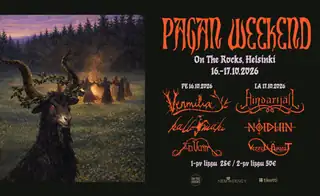 95festivalFri 16.10.Pagan Weekend 2026
 95concertMon 22.2.Five Finger Death Punch | Premium Suite Ticket
 94concertThu 19.11.Iiro Rantala - An Evening with Iiro
 86stand-upSun 8.11.Nicko McBrain - An Evening With Nicko McBrain