Great Insights from Thinkers of the New Age
Helsingin työväenopiston Opistotalo, Helsinki
vapaa pääsy
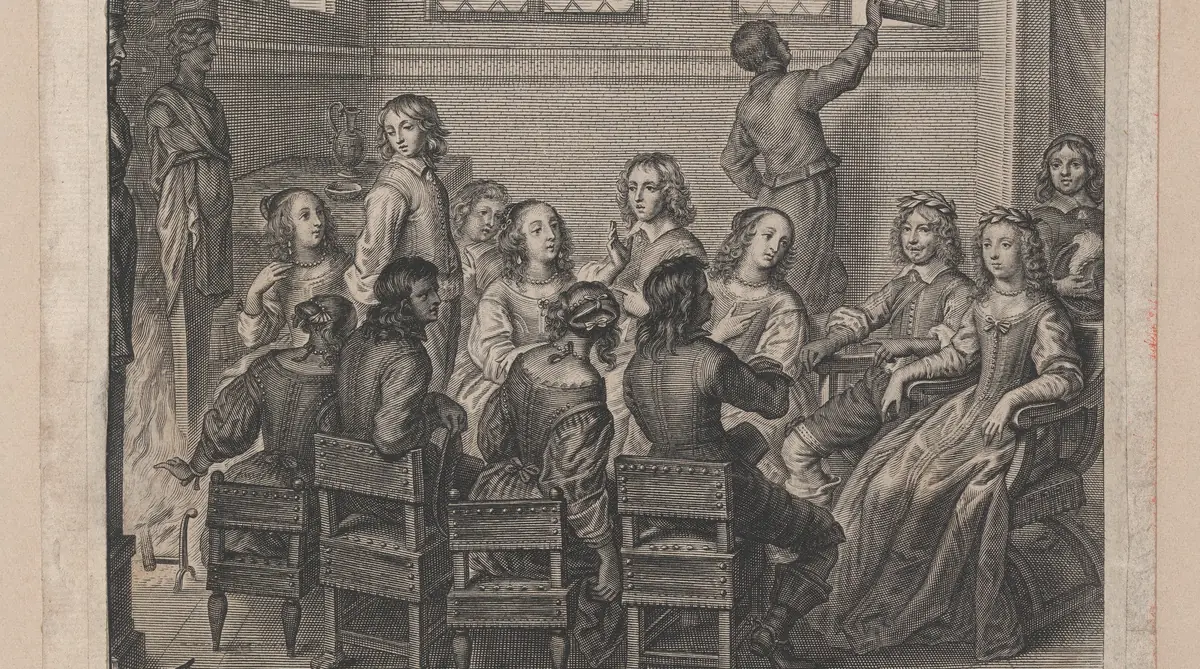
The 17th century marked a technological, scientific, and religious upheaval in Europe - an upheaval that laid the groundwork for industrial and political revolutions, as well as later European colonialism.
More effective firearms destroyed the remnants of smaller princes' power and ended the medieval social order. The printing press made books and pamphlets cheaper, encouraging literacy and learning to spread ever more widely - even among Europe's wealthier women. New "fashion crazes" - coffee, tea, and tobacco - drew thinkers together to enjoy these known as humanity's most effective stimulants. The uncertainty caused by religious wars drove thinkers to seek new ways to interpret faith, the world, and the state - and the pace of European thought began to overshadow the intellectual achievements of other regions.
The lecture series covers the era's central figures and questions as follows:
8.9. What can we know for certain: René Descartes and Elisabeth of Bohemia
15.9. The century of women philosophers: Margaret Lucas Cavendish, Mary Astell, and Anna Maria van Schurman
22.9. Why silence? Philosophy in South and East Asia in the 17th century
29.9. Philosophy and Christianity: Francisco Suárez, Antoine Arnauld, and Baltasar Gracián
6.10. European outsider religious critic: Baruch Spinoza
20.10. Philosophy and mathematical method: Blaise Pascal, Isaac Newton, and Gottfried Leibniz
27.10. State and law: Hugo Grotius, Thomas Hobbes, and John Locke
The lecturer is a Master of Arts, science writer, teacher, and doctoral candidate in practical philosophy, Severi Hämäri. Free admission.
Lectures · Helsinki 107 in the next 30 days →
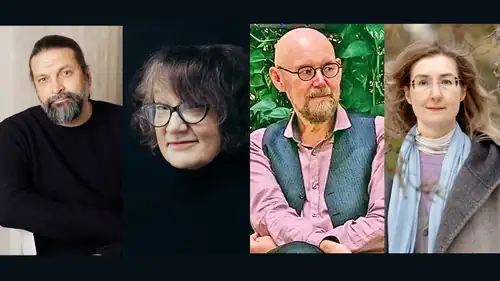 52lectureMon 7.9.Kanneltalo's Author Guests, Autumn 2026
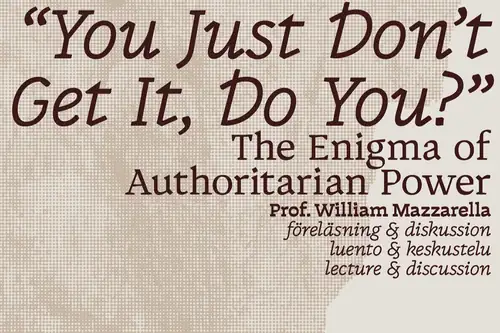 46lectureThu 27.8."You Just Don't Get It, Do You?" - The Enigma of Authoritarian Power
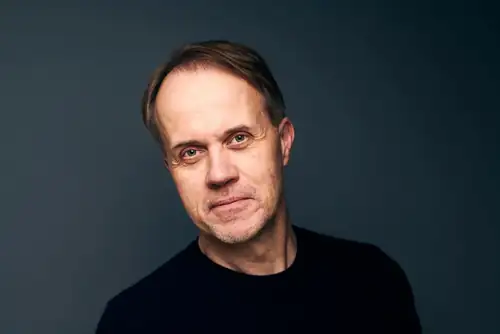 43lectureThu 10.9.Author Petri Tamminen on a Visit
 43lectureWed 16.9.Malmitalo Author Guests, Autumn 2026
 40lectureTue 25.8.Literature Evening: Destroyed Childhood - The Auer Family Miscarriage of Justice
 40lectureSat 29.8.In the Forest's Protection - Roundtable Discussion on Utopian Futures | Finland's Nature Day
 96concertTue 28.7.Scorpions
 94concertSat 25.7.Patti Smith Quartet
 93festivalFri 7.8.Hellsinki Metal Festival
 93concertFri 14.8.Charon
 89festivalFri 14.8.Flow Festival 2026
 73clubSat 8.8.Hellsinki Metal Festival Official Afterparty: Fear of Domination, Bloody Falls, dj KING S8N